
Mont Sorcier Mining Project
Planning Phase Engagement Report
Mont Sorcier Mining Project
Document reference number: 95
Published on February 26, 2026
Updated on April 28, 2026
On this page
- 1. Introduction
- 2. Consultation and engagement during the preparatory phase
- 3. How comments were used
- 3.1 Identifying key issues and the proponent's response
- 3.2 Informing the decision on whether to require an impact assessment
- 3.3 Informing the preparation of customized impact assessment guidelines
- 3.4 Inform the preparation of the Aboriginal Engagement and Partnership Plan
- 3.5 Informing preparation of the Public Participation Plan
- 4. Next steps
- 5. Stay informed
1. Introduction
On September 19, 2025, the Joint Impact Assessment Committee (the committee) commenced an impact assessment of the Mont Sorcier Mining Project (the project) proposed by Voyager Metals Inc. During the Planning phase, the committee conducted consultation and engagement activities with Indigenous People and the public.
In order to carry out the impact assessment process, the Impact Assessment Agency of Canada (IAAC) and the Cree Nation Government (CNG) signed an agreement in May 2023 concerning the federal external assessment process for the Mont Sorcier Mining Project under the James Bay and Northern Quebec Agreement and the Impact Assessment Act (IAA). The Agreement delegates to a joint assessment committee (the committee), composed of representatives appointed by the CNG and IAAC, the responsibility for carrying out the activities required under the IAA. This report has been prepared by the committee and explains how comments provided by Indigenous People and the public were considered in the impact assessment process.
1.1 Project context
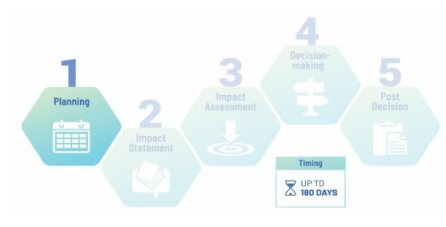
Voyager Metals Inc. (the proponent) is proposing the construction, operation, decommissioning, and closure of an open-pit iron and vanadium mine located in the Eeyou Istchee James Bay Territory, in the municipality of Chibougamau, about 20 kilometers northeast of the Town of Chibougamau, Quebec, in the traditional Cree territory. As proposed, the Mont Sorcier Mining Project would include a pit and the construction of an ore processing facility. The proponent also plans to build a 49-kilometres railroad that would connect to the existing track to transport the concentrate by train to the Grande-Anse Marine Terminal, where it would be stockpiled for export purposes. The mine's production capacity would be about 5 million tons per year (average rate of 13,700 tons per day) and the estimated life of the project would be 21 years. The Planning phase for the project's impact assessment ended on September 19, 2025. This phase is the first of five phases in the federal impact assessment process under the IAA (Figure 1). The Planning phase allows for the identification of key issues related to the project, the determination of whether an impact assessment is required, an understanding of how Indigenous People and the public wish to participate in the impact assessment process, and the planning of the assessment.
Source: Impact Assessment Agency of Canada, 2025
Timeline
- Planning
- Impact Statement
- Impact Assessment
- Decision-making
- Post Decision
Figure 1 - Text version
The federal impact assessment process under the Impact Assessment Act consists of five phases: Planning, Impact Statement, Impact Assessment, Decision-Making, and Post-Decision. The maximum duration of the Planning phase is one hundred and eighty days.
1.2 Report content
This report provides information on the consultation periods, including consultation and engagement activities carried out by the committee during the Planning phase. It explains how comments from Indigenous People and the public were gathered then used to identify key issues, and to inform about this process and related documents.
Information on the next steps in the impact assessment process, as well as how to stay informed, is also included in this report.
2. Consultation and engagement during the Planning phase
In May 2023, the committee launched a public consultation period on the Summary of an Initial Project Description and invited Indigenous Peoples, federal authorities, and the public to provide feedback on the project. As part of this consultation period, virtual public information sessions were held on June 28 and July 5, 2023, to allow Indigenous Peoples and the public to learn about the project, the impact assessment process, and how to submit comments. In addition, on July 11, 2023, the committee held a meeting with representatives of the Cree communities of Mistissini and Oujé-Bougoumou to support their understanding of the federal impact assessment process and allow them to raise their key questions and concerns.
In July 2025, the committee launched a second public consultation period to gather comments on the draft on Tailored Impact Assessment Guidelines (TISG) and the draft Public Participation Plan. The Mistissini and Oujé-Bougoumou Cree Nations and the Pekuakamiulnuatsh Innu First Nation were consulted on the draft Indigenous Engagement and Participation Plan (IEPP) and key issues (see Section 3).
During both consultation periods, Indigenous Peoples, federal authorities, and the public were invited to submit their comments directly online by visiting the project page on the registry or by contacting the project team using the contact information provided on the registry.
In total, over the course of these two comment periods, the committee received 37 written comments from various sources including federal authorities, Indigenous Peoples, non-governmental organizations, and members of the public. This total includes comments received outside of the official public consultation periods. For transparency purposes, the comments were posted on the registry, subject to exceptions related to privacy, security, or confidentialityFootnote 1 .
3. How input was used
3.1 Identifying key issues and proponent responses
The committee identified key issues based on comments received during consultation and engagement activities carried out during the Planning phase. The following are examples of key issues identified by Indigenous Peoples, federal authorities and the public in relation to effects falling within federal jurisdiction or potential adverse impacts on the rights of Indigenous Peoples recognized and affirmed in section 35 of the Constitution Act, 1982:
- Changes to fish survival, fish health and fish habitat, including the harmful alteration, disruption or destruction of fish habitat in Chibougamau Lake and any other water bodies (lakes and ponds) or watercourses (permanent and intermittent) that may be affected by the project;
- Effects on migratory bird species, including those at risk, and their habitats under the Migratory Birds Convention Act, 1994 and the Species at Risk Act. Migratory birds species at risk include Common Nighthawk, Barrow's Goldeneye, Bank Swallow, Barn Swallow, Olive-sided Flycatcher, Canada Warbler, and Red-necked Phalarope;
- Effects on the physical and cultural heritage of Indigenous Peoples related to changes to the known and recognized landscape associated with the disappearance of Mont du Sorcier; and
- Reduction or cessation of traditional activities of Indigenous Peoples due to concerns about the presence of contaminants.
Taking into account the issues raised by Indigenous Peoples, federal authorities, and the public, the committee prepared a Summary of Issues and submitted it to the proponent. In May 2025, the proponent submitted its Réponses au sommaire des questions (French only) in which it provided information addressing these issues. In this document, the proponent indicated it's intentions:
- To prepare inventories of watercourses that could be affected by the project, including a list of permanent and intermittent waterbodies and watercourses, and to identify the direct and indirect effects of the project on these environments.
- To develop mitigation measures to minimize the project's effects on fish, fish habitat, and aquatic species of special status during the project planning and design, construction, operation, and decommissioning phases.
- To conduct inventories of avian fauna and migratory birds in order to develop mitigation measures and minimize the project's effects during the planning and design, construction, operation, decommissioning and abandonment of the mine site.
- To assess the overall effects on the landscape using digital tools, such as photo simulations of the proposed infrastructure; and
- To estimate and assess toxicological risks to human health, which will inform the development of mitigation measures in collaboration with the affected Indigenous Peoples and could lead to the development of a plan or strategy aimed, in particular, at maximizing access to traditional foods, medicinal plants, or plants used for spiritual purposes.
3.2 Informing the decision of whether to require an impact assessment
On June 9, 2025, the IAAC issued a Notice of Impact Assessment Decision with Reasons. In issuing this notice, IAAC considered several factors, including comments received from Indigenous Peoples, federal authorities, and the public, and determined that the carrying out of the project may result in adverse effects within federal jurisdiction or adverse direct or incidental effects. This includes potential adverse effects on fish and fish habitat, migratory birds, and Indigenous Peoples. The project may also have adverse impacts on the rights of Indigenous Peoples.
3.3 To contribute to the preparation of Tailored Impact Statement Guidelines
The Tailored Impact Statement Guidelines (TISG) set out the information and studies that a proponent must include in its Impact Statement. Comments received from Indigenous Peoples, federal authorities, and the public were received during the Planning phase contributed to the development of the TISG for the project.
Following the second consultation period, the following changes were made to the final version of the Tailored Impact Statement Guidelines, taking into account comments received on key issues and on the draft of the guidelines:
- Additional details were added and revisions were made to the valued components selected for the effects assessment (Table 1 of the TISG) in response to comments received from Indigenous Peoples and federal authorities regarding key issues and identified valued components.
- Clarifications were made to certain requirements related to the description of baseline conditions for groundwater, surface water, fish and fish habitat, as well as to the assessment of effects on these components. Supporting documents proposing mitigation measures were also added as reference materials for the proponent.
- To address comments received from Indigenous Peoples regarding key issues, clarifications and additions were made to the requirements related to baseline conditions for natural and cultural heritage, including the identification of historic travel routes, former campsites, and plants and trees used for medicinal purposes and for the production of items of cultural importance.
- Comments on key issues also resulted in the addition of beaver and willow ptarmigan as species of importance to Indigenous Peoples.
3.4 Informing preparation of the Indigenous Engagement and Partnership Plan
An Indigenous Engagement and Partnership Plan (IEPP) describes the opportunities and methods for conducting meaningful engagement and consultation with Indigenous Peoples that may be affected by the project. The committee worked collaboratively with Indigenous Peoples to prepare the IEPP for the project.
During the Planning phase, Indigenous Peoples contributed to defining the objectives, activities, and tools to facilitate their consultation in relation to the project. The IEPP provides a summary of these elements.
Comments provided by Indigenous Peoples during the Planning phase helped IAAC better understand of which communities could be impacted by the project and the potential nature of these impacts. The IAAC adjusted the IEPP in response to these comments into account.
3.5 Informing preparation of the Public Participation Plan
A Public Participation Plan describes how the public will be engaged throughout the impact assessment process. Public comments informed the development of the Public Participation Plan for the project.
Public comments helped the committee understand how different participants prefer to engage in the impact assessment process. For example, some participants preferred to take part in virtual information sessions, while others preferred to submit their comments on the registry. Public comments also helped the committee identifying organizations with an interest in the project's impact assessment.
4. Next steps
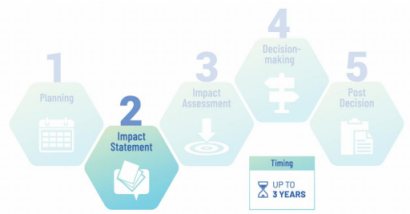
On September 19, 2025, the committee issued the Notice of Commencement of an Impact Assessment for the project and provided the proponent with the final version of TISG. This milestone marked the beginning of the Impact Statement phase (Figure 2), during which the proponent will gather information and conduct studies as described in the TISG to prepare the Impact Statement.
Source: Impact Assessment Agency of Canada, 2025
Timeline
- Planning
- Impact Statement
- Impact Assessment
- Decision-making
- Post Decision
Figure 2 - Text version
The federal impact assessment process under the Impact Assessment Act consists of five phases: Planning, Impact Statement, Impact Assessment, Decision-Making, and Post-Decision. The Impact Statement phase has a maximum duration of three years under the Impact Assessment Act.
The committee will continue to consult and engage with Indigenous Peoples and the public throughout the Impact Statement and Impact Assessment phase. As part of upcoming consultation and engagement activities, Indigenous Peoples and the public will be invited to provide comments on the proponent's Impact Statement, as well as on the Draft Impact Assessment Report and the committee's draft potential conditions.
5. Stay informed
5.1 Stay informed about the impact assessment of the Mont Sorcier Mining Project
- For updates on the progress of the Mont Sorcier Mining Project impact assessment, including information on future opportunities to provide comments, visit the project page on the Canadian Impact Assessment Registry.
- You can also request to be added to the distribution list by sending an email to montsorcier@iaac-aeic.gc.ca.
5.2 Stay informed about the Impact Assessment Agency of Canada and other impact assessments
- For general information about IAAC and the impact assessment process, including how to participate, visit the IAAC's Website.
- For information on other assessments, visit the Canadian Impact Assessment Registry.
- You can also subscribe to the Canadian Impact Assessment Registry notification service to receive a personalized email when new content is posted.
- To receive news and alerts from the IAAC directly on your Really Simple Syndication (RSS) Feeds reader, you can subscribe to the IAAC RSS feeds.